Jan 292016
 

16505_n

011_o

ROOTS et reçoivent le CHARM Label QC GROUP Europe (Queen Christina – Europe). This label is awarded to companies and associations who have decided to adopt the principles of the defence of the values of tolerance, passion for knowledge, the affirmation of the freedom of movement of ideas, the recognition of an identity within this set of varied cultures that constitutes Europe and all its richness. Europe, as its institutions, suffers from a lack of image as she has never known. It is little or no visible, hardly readable, increasing a sense of doubt among many citizens. Europe, It is the peace and growth, No one can deny this reality reinforced by nearly seventy years of political stability.
The objective of the Association Christine of Sweden, the European is to promote the engagement of all, without partisanship, on a collective project, bearer of indisputable values, Gatherer of energies and enthusiasm; the watchwords are tolerance, living together, La passion des savoirs et du progrès dans l'affirmation d'une identité nationale ET européenne.

Nous en sommes fiers et reconnaissants

Roots and ENCHANTMENT GROUP received the Label QC Europe, Queen Christina, Europe

A Label awarded to companies and associations that have decided to adopt the principles of the defence of tolerance values, passion for culture, the affirmation of the freedom of movement of ideas, the gratitude of an identity within this set of various cultures that is Europe and all its richness.
Europe, as its institutions, suffers as never before by a deficit of image. It is not or hardly visible, even less understandable, increasing a feeling of doubt at an increasingly important number of citizens. The goal of the Association Christine of Sweden, is to promote the involvement of all, no partisan spirit, on a collective project, indisputable values, unifier of energies and enthusiasm; keywords are the tolerance, the live-together, a passion for knowledge and progress in the establishment of a national and European identity.
Like roots and we are proud and appreciative ENCHANTMENT GROUP

Jan 282016
 

1,30 Euro, price of a subway ride, exhibition of contemporary art included ! Naples, Sixteen “Art stations” have been designed by leading architects, designers and artists of the world. The last was inaugurated Monday. Et ça n'est pas fini !

http://www.vivere.napoli.it/stazioni-art-Metro-Naples/

000_dv1341232

METRO4

METRO2The Administration has transformed the simple and unattractive underground of Naples in fascinating places where citizens can meet contemporary art while public service. The Interior of the line 1 and the line 6 are home to around 200 works by 100 contemporary artists, turning every subway station in an exhibition opened. A museo distribuito sull'intera area urbana che allows al territorio di acquistare a valore nuovo e fama internazionale.
Toledo stopped – classified more beautiful resort in Europe by the British newspaper The Daily Telegraph -, It is properly “snapped up” by the nearby Mediterranean : down in the bowels of the Earth, surrounded by blue mosaic squares, as at the bottom of a swimming pool, that a skylight connects to the outside world.

The Toledo station

Then, These are the “Waves” the Catalan Oscar Tusquets Blanca, which pick us at the foot of the escalator, before being “rocked” by the work of Robert Wilson, “By the sea… you and me”, consists of panels inlaid with led bulbs, that are raised on our passage. The “Art stations”, which accommodate not less than 200 works, fit into a comprehensive plan planning and development of public transport in Naples, known for its Monster traffic jams. Pink fuchsia in a direction, yellow-green in the other, University station is the only one to be designed entirely by a single artist, Anglo-Egyptian designer Karim Rashid.

Università station

Pavement, walls, up the stairs leading to the exit, one decorated with the portrait of the poet Dante Alighieri, other than his muse Beatrice : everything must compete to make live the one traveller “sensory and aesthetic experience”. It is Achille Bonito Oliva, artistic coordinator with the company managing the metro, who has chosen for each of the artists, architects and designers, Italian and international. “It is a meeting between beauty and transport. We ask artists to create a work that fits into the station”, He explains to AFP. No question here of “decorate” simply space, but to create “a mandatory Museum”, in order to generate from the “familiarity” between travellers who do not go to the Museum and an art “that trip” and has “a social function”, Adds the art critic. In a city weighed down by unemployment and poverty, It is important to “put the art in people's lives”, Adds the Director of MetroNapoli, Giannegidio Silva.

Launched in the early 2000 and with a budget of a billion and a half euros, project, funded half by Europe, reached Monday a new dimension with the opening under the place Garibaldi of the sixteenth “the art station”, prior to its opening to the public in late December. French architect Dominique Perrault, creator of the Bibliothèque François-Mitterrand in Paris, who was responsible for its design. Thought to be a multimodal hub connecting the railway station, two existing metro lines and regional traffic, the Garibaldi station is expected to double the number of daily users, currently valued at approximately 200.000.

The Garibaldi station

Before a panel of officials, the Mayor of Naples, Luigi de Magistris, has leased to the microphone of the AFP “This underground contemporary art museum and our metro, one of the most beautiful in the world”. At the bottom of the escalators from the Garibaldi station, at a depth of 40 metres, under a canopy made of metal tubes, the aptly named “Stazione” Pistoletto, one of the pillars of the contemporary movement “Arte Povera”, presents a large mirror, pictures of passengers waiting, talk, look at.

Present at the inauguration, the artist's 80 years says that it matured for a long time a work “on the idea of the station” : “passenger/spectators entering the work, even a moment (….), It is a relationship between life and art, art and the train station”.

In here to 2015, open to turn stations “Duomo”, artwork of Massimiliano FuKSAs, and “Municipio”, directed by the Portuguese Alvaro Siza and Eduardo Souto de Moura, both winners of the Pritzke awardr, the NobEl Architects.

Jan 202016
 

AND’ dead Ettore Scola, the last great master of Italian comedy. Had 84 years. The great Director has gone off of the Department of cardiac surgery of Polyclinic in Rome.

scola
With its cinema told the Italy that is rescued by fascism and tried to forget the war, with a deep but mild language has been able to draw all kinds of Italians, leftist intellectuals to merchants that compete. Protagonist, first as a writer and then as a Director, some of the finest pages of Italian cinema, Ettore Scola was born in Trevico (Avellino) the 10 may 1931.

His career began in the field of journalism with the humorous magazine collaboration Marc'aurelio and with those that then he will call “scribbles, which had devoted himself at an early age, at the same time as the course of law in Rome. Then in the mid-' 50 began writing screenplays, working with Age and Scarpelli, for films like UN americano a Roma (1954), The great war (1959) and Crimen (1960). The directorial debut is in 1964 with the movie If we are talking about women with Vittorio Gassman, that together with Nino Manfredi and Marcello Mastroianni, It will be one of the favorite actors from Scola.

With Il commissario Pepe (1969) and Dramma della gelosia – All details in Chronicle(1970) Scola enters the most important decade in her career. In 1974 directs C'eravamo tanto amati, movie spanning thirty years of Italian history from 1945 Al 1975 through the story of three friends played by Vittorio Gassman, Nino Manfredi and Stefano Satta Flores, all in love with Luciana (Stefania Sandrelli). The film is a masterpiece that definitively among the great Italian cinema giving him also the internationally. Other essential titles such as Ugly, sporchi e cattivi (1976), winning the award for Best Director in Cannes, and UNA giornata particolare (1977) with Sophia Loren and Marcello Mastroianni, Perhaps the most acclaimed film of Scola abroad. In 1980 the filmmaker spins The terrace, bitter budget of a group of left-wing intellectuals in crisis. Emblem of the years ' 80 of Scola's movie The family (1987), comedy that traces 80 years of history (1906-1986) with Vittorio Gassman, Stefania Sandrelli and Fanny Ardant.

With the movie Unfair competition, set during fascism, and the documentary dedicated to Rome, Ettore Scola said he ended his activities as Director. Actually in recent years had made two documentaries, one dedicated to Rome,Gente di Roma, and another on his great friend with whom he had worked since the days of Marc'aurelio, What a strange name was Federico.
Ettore Scola was married to the screenwriter and Director Gigliola Scola. Together with her two daughters angelene had presented in November at Rome the documentary chronicling his life and career, Laughing and joking. On that occasion he said: “Cinema is a tough job but can you laughing and joking send some messaggetto, some postcard with your observation about the world. The cinema is like a spotlight that illuminates the things of life”.

Jan 192016
 

Maybe you talk about or maybe not, but certainly lent words and expressions to your vocabulary and know several people who use it at will. Yes, I refer to the dialect, one of the many riches of the Italian language by which the 17 January is celebrated as the national day. Linguaenauti took the opportunity and, simplifying simplifying, has put together some interesting facts on the dialects of the boot.

c-002

We start with some data: the latest Istat report on the use of dialect was published in late 2014 (data collected in 2012). The 53,1% the champion between the 18 and the 74 years speaks Italian in family, While the prevalent use of dialect covers the 9% of the population (the percentages go down with friends and crumble with strangers). Women show a greater tendency to speak in Italian family (55,2% against the 51% of men) and with friends (60,9% against the 51,7% of men). Overuse or exclusively by the Italian family is more prevalent in the Centre and in the North West (69,5%) compared to 38,8% residents in the Northeast, South and Islands.
Dispelling any belief

dialetti
The idea is still widespread dialects are a "corruption" of the Italian, but it is not so: are the normal evolution of the language spoken locally, that comes mainly from Latin (but also from German dialects in the North and from the Greek and Albanian in the South) with the influence of preceding languages (the substrates) or you arrive later with military conquests, migratory movements, and so on. The Italian standard has evolved from toscano. Why toscano? Simply said: Thanks to the prestige and success of vernacular authors such as Dante, Boccaccio and Petrarch (as we know, even the milanese Manzoni went to rinse the cloths in Arno centuries later). After the unification of Italy this mainly literary language spoken by a small percentage of the population became widespread thanks to compulsory education and, especially, on television. In short, think: If Jacopone da Todi had had more luck today much more Italian would resonate in the peninsula!

Languages or dialects?

The controversy over the definition of language and dialect is long and winding and in Italy becomes particularly complicated for the wide variety of patois, some with a long literary tradition or politics. The Italian Government officially recognizes as the Sardinian languages, Friulian and Ladin, While UNESCO also recognizes the Neapolitan and Sicilian. The debate between cultural heritage and the normal development of languages is still long.

Which dialects are spoken in Italy?
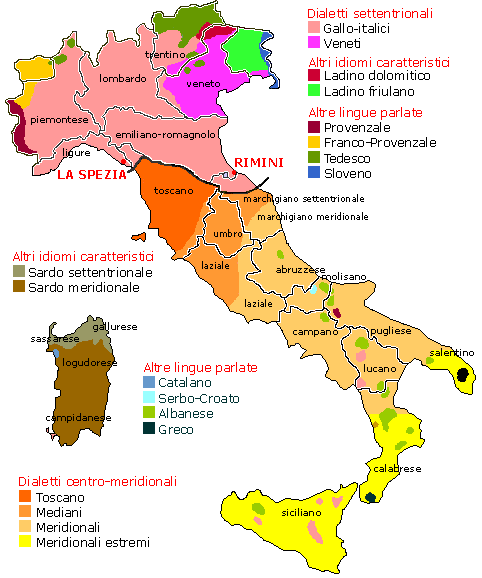
It is very difficult to draw sharp boundaries for Italian dialects, Since the variety is so wide as to not allow the identification of large bundles of isoglosses, or geographical areas sharing the same morphological traits, phonetic or lexical. Said more simply, in neighbouring villages also have Italy dialects with very marked differences.

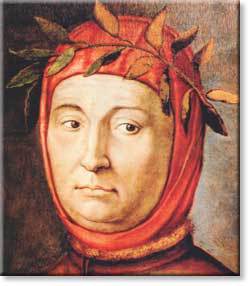
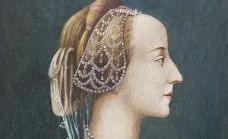
francescopetrarca_250x286However it is possible to identify the main areas according to certain characteristics that can group a number of dialects, I would just like to point out just a few phonetic that surely you will recognize. The first is the La Spezia-Rimini line and delimits the Northern dialects, with the weakening of the intervocalic consonants (for example the simplifications of double), the unstressed final vowels fall except the a and assibilazione, or conversion into s, of palatal consonants such as c. In short, good old gióso de vin (where "drop" of course is a metonymy for "full glass"!).
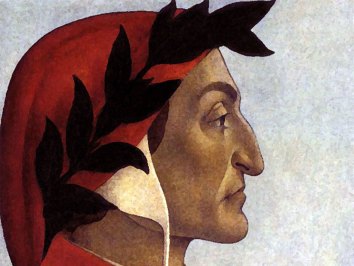
dante_alighieri_2The Rome-Ancona line separates Tuscany from the macro-area Center- Southern, ranging from Lazio, Umbria and the marches up to the Northern Apulia and Calabria. As we said, Dal toscano derives the Italian standard, but the differences are there and how. The engaged in so-called gorgia toscana, that is the aspiration of k, t, p (Billy is in phratho). The South Central instead is characterized by indistinct final vowel ə (how much is bellə!), for PA application of the nasal stops after, as tooth > Dende and affrication of s (a lovely).

canzoniereExtreme southern dialects range from Salento to Central-Southern Calabria to Sicily and also in this case the common traits are many and interesting, as the distinction between o and u Latina finals (focu meu! is the "Oh my God"! of southern Calabria) or sound cacuminali sayings, Curiously also present in Indian languages and Scandinavia: the affectionate appellation bedda mia has just that sound sound retroflex Occlusive.
Jan 192016
 

LaStampa.it

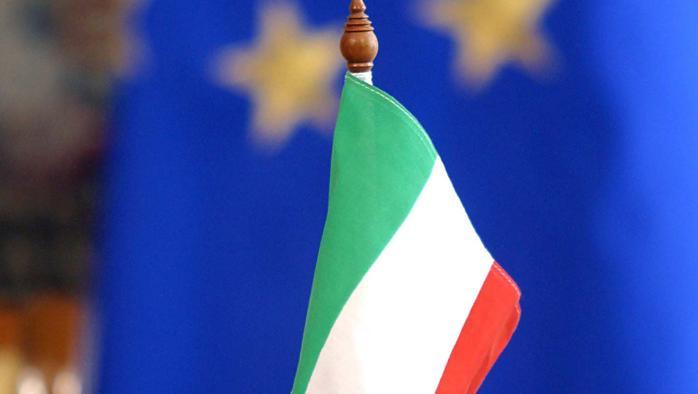
The Italian will no longer be discriminated against in competitions of the European Union institutions ' personnel selection. After a long legal battle and a series of appeals brought from Italy – who made common front with Spain – starting from next spring will no longer English, French and German to get her Masters.

The news comes with Eu Commission Vice President Kristalina Georgieva's answer to a question tabled by the European Parliament Vice-President Antonio Tajani together with his colleague Ramon Luis Valcarcel after the judgments of the European Court of Justice which had proved right in Italy and Spain on discrimination of national languages.

"The Commission believes that it is possible to improve certain elements of existing general rules on the use of languages in the competitions managed by Epso (European personnel selection Office) in the light of the judgments», said Georgieva, Recalling that "in this context, Epso is currently reviewing General provisions concerning competitions».

«Battle won, the Italian language will no longer be discriminated against in the EU ', said Tajani, After responding to Gale that, for its part, has ensured that "Epso will work to ensure full respect for the principle of non-discrimination that proper operation and corrected the EU administration in the presence of 24 official languages».

By judgment of 24 last September, the Court of Justice annulled three competitions organised by Epso because of the fact that the language had been reduced to the German-English-French and was also imposed on the candidates to choose the second language within the same pink. And the 17 December the Eu Court annulled with three decisions a number of invitations to tender Epso for having discriminated against the Italian language.

Since 2011 the European personnel selection Office had begun to adapt and to publish some invitations to tender and the pre-selection tests in all EU official languages. But now there will be new rules apply always and for everyone. And the time is short: the European personnel selection Office, explained Georgieva, «intends to publish the revised selection process in the spring of 2016».


Dec 112015
 

Cycle of conferences hosted by Bernadette DE PASCALE-DALMAS

pittori2

L' Friendly Italian BLAGNAC-POMIGLIANO D'ARCO
Invites you to a cycle of conferences on THE ITALIAN PAINTERS

Hosted by Bernadette DE PASCALE-DALMAS

INFORMATION 05 61 59 51 63 – Email bdepascale@free.fr Free entry

potptee

pittori


pitpetput

Dates 2016 – Thursdays, at 6 p.m.

7 January FLORENCE, POLLAIOLO and his workshop

4 February FLORENCE, VERROCCHIO and his workshop

3 March of CHIRICO, PAINTER METAPHYSICS

7 Avril LEONARDO or the dream of Icarus

12 May MODIGLIANI, PORTRAITS of women

The Town Hall Auditorium

Place J-Louis Puig

31700 BLAGNAC